With significant roster changes and upgraded facilities, Western Australia's flagship club is banking on venue advantage to reclaim premiership contention.
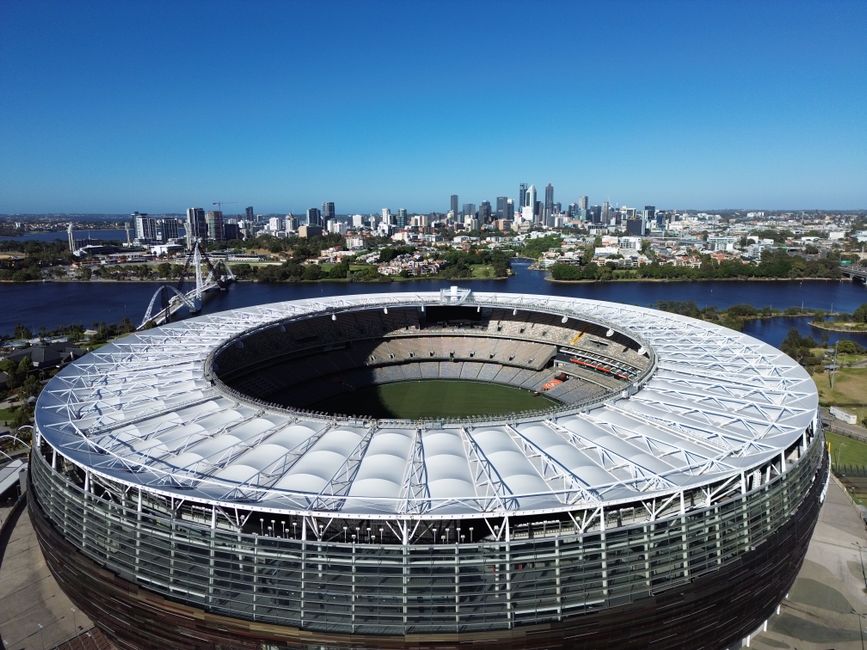
Perth Glory's ambitious restructuring has thrust the A-League club back into the sporting consciousness of Western Australia, with their home at Optus Stadium now positioned as a fortress during what could prove a transformative 2026-27 campaign. The 60,000-capacity venue in Burswood has undergone substantial upgrades to player facilities and training infrastructure, reflecting the club's commitment to competing at the highest level after several seasons of rebuilding.
The Glory's recent recruitment drive has captured local attention, particularly given the competitive pressures facing the A-League in an increasingly crowded sporting landscape across Australia. With Perth's football fan base traditionally among the most passionate in the nation, the club recognizes that Optus Stadium's intimidating atmosphere—when properly harnessed—provides measurable advantage in a league where travelling sides face genuine difficulty.
Located adjacent to the Swan River in one of Perth's most accessible precincts, the stadium's position has enabled the club to strengthen community engagement across Perth's western suburbs and the CBD. Match attendance figures have stabilized around the 15,000-20,000 mark during regular fixtures, a modest but meaningful recovery from previous seasons.
Advertisement
The club's investment in sports science and conditioning at their Wangara training facility underscores a professionalization push mirrored by enhanced matchday operations at Optus. Hospitality packages now range from $150 general admission to premium experiences exceeding $300, reflecting broader commercial ambitions beyond traditional supporter bases.
Perth's broader sporting infrastructure—including the newly renovated Subiaco Oval and the specialized cycling facilities in Claremont—has created competitive advantage in recruiting coaching staff and player development specialists. This ecosystem positioning matters significantly as Glory competes against well-funded rivals in Melbourne, Sydney, and Brisbane.
The 2026-27 season represents a genuine inflection point. Success would validate the club's investment thesis and potentially unlock deeper community connection beyond the traditional football demographic. Failure could signal another false dawn for a franchise that has struggled to maintain consistency despite Western Australia's demonstrated sporting passion.
Optus Stadium's technical capabilities—including premium media facilities and adaptive ground management systems—position Perth competitively against larger eastern-coast venues. Whether Glory can translate infrastructure advantage into silverware remains the defining question as the club approaches its most important campaign in years.
This article was compiled by AI and screened before publishing. See our editorial standards.