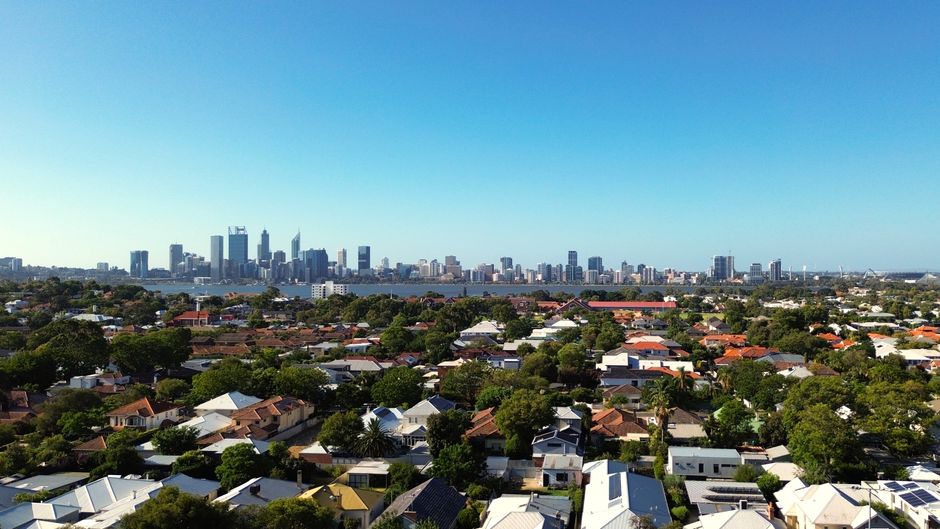
As the WA capital's sub-1% vacancy rate fuels competition, detached houses are outpacing units by thousands of dollars—a split that reveals shifting buyer priorities in Australia's tightest rental market.
Perth's property market is splitting into two distinct races, and the gap between houses and apartments is widening at pace.
While detached homes across the metropolitan area continue their upward march toward and beyond the $680,000 median, apartment values have plateaued. In established suburbs like Dalkeith and Nedlands, detached homes regularly exceed $2 million. Meanwhile, comparable-location units languish 15–25 per cent below their 2022 peaks, creating a chasm that reflects fundamental shifts in buyer behaviour.
The divergence is most pronounced in inner-city precincts. East Perth apartments that traded at $550,000 two years ago now fetch $480,000–$510,000. Conversely, modest three-bedroom homes in Ascot and Mount Lawley—suburbs where established character housing dominates—have climbed steadily, with many crossing $1.1 million despite comparable square metres.
Advertisement
Data from the broader market tells the story. Detached house values across the metro area have grown roughly 8–10 per cent annually since 2024, while unit appreciation has stalled at 1–3 per cent. In growth corridors like Joondalup and Wanneroo, new house releases command premiums, while apartment developments struggle to shift stock.
Experts point to several drivers. Perth's sub-1% rental vacancy has made landlord-investors bullish on single-family homes, where tenant retention is typically stronger. Meanwhile, first-home buyers—squeezed by interest rates that remain above historical norms—increasingly favour houses over apartments, betting on land value and perceived durability.
The rental market underscores this. A three-bedroom Subiaco house rents for $600–$700 weekly; an equivalent-sized apartment barely commands $520. Investors are voting with their feet.
Supply also matters. Apartment development in the CBD and surrounding precincts like South Perth and Northbridge has slowed due to construction costs and tighter lending conditions. New house estates in Ellenbrook and The Vines continue attracting families seeking space—particularly post-pandemic remote-work arrangements that favour home offices and backyards.
The implications are clear: buyers seeking capital growth should prioritise detached homes in established suburbs or growth zones. Unit buyers must focus on lifestyle and location rather than banking on appreciation. Investors might reconsider the apartment segment until sentiment shifts.
For Perth's market, this isn't merely a price correction—it's a recalibration of what the city values. As the metro sprawls outward and inner-city living competes with suburban space, the house-unit gap may persist, reshaping both buyer strategy and the city's residential landscape.
This article was compiled by AI and screened before publishing. See our editorial standards.