Perth's Renewable Push Clashes With Labor, Land Issues
Western Australia's green energy expansion creates new ethical problems: rare earth mining, worker rights concerns and Indigenous land disputes.
2 min read
Western Australia's green energy expansion creates new ethical problems: rare earth mining, worker rights concerns and Indigenous land disputes.
2 min read
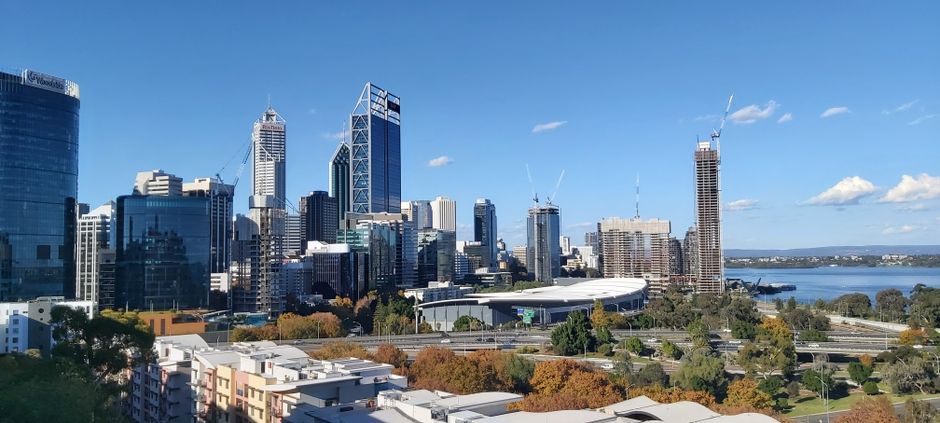
Perth's gleaming skyline now bristles with solar panels and wind turbine blueprints. The City of Perth Council has committed to net-zero emissions by 2035, while developers around Northbridge and East Perth race to retrofit office towers with battery storage systems. It sounds like progress. But beneath the green veneer lies a tangle of uncomfortable questions that few in the startup ecosystem want to discuss openly.
The renewable energy transition requires vast quantities of lithium, cobalt and rare earth elements. Western Australia sits atop some of the world's richest deposits. Yet the processing facilities that transform these raw materials into solar panels and EV batteries often operate under murky environmental and labour standards—frequently in jurisdictions far from Perth's prosperous suburbs. A 2025 University of Western Australia study found that cobalt sourcing for local battery manufacturers involved supply chains with documented worker safety violations in three continents.
"We're essentially outsourcing the dirty work," says the research community quietly, aware that questioning the ethics of green technology can attract accusations of obstructionism. This tension plays out in real time: while Woodside Petroleum pivots toward hydrogen and carbon capture projects, indigenous land councils in the Pilbara have raised concerns about cumulative environmental impact from expanded mining operations needed to fuel the energy transition.
Then there's the problem of scale. Perth's renewable ambitions depend heavily on grid infrastructure upgrades—copper wiring, transformer manufacturing, concrete foundations for wind farms. Each of these components carries a carbon debt that takes years to repay. An average utility-scale solar installation breaks even environmentally in roughly 18 months, but that assumes manufacturing emissions are accurately accounted for. They rarely are.
The social dimension is equally fraught. Green energy jobs in WA tend to cluster in high-skill sectors—engineering, systems management—leaving traditional mining communities struggling to retrain. Communities around Kalgoorlie have watched solar manufacturing facilities promise employment only to automate aggressively once operational.
Perth's tech community, concentrated around innovation precincts near the Swan River and South Perth, remains bullish on solutions. Start-ups developing AI-optimised grid management and recycling technologies are attracting investment. Yet without transparent supply chain audits, binding labour standards, and honest accounting of embodied emissions, the green energy transition risks becoming merely a rebranding exercise—exporting environmental and ethical costs while claiming climate virtue.
The question Perth must confront isn't whether renewable energy is necessary. It clearly is. Rather: at what human and environmental cost are we willing to pursue it?
This article was compiled by AI and screened before publishing. See our editorial standards.
Spread the word
About this article
Published by The Daily Perth
Stay in the loop
Daily brief
Free, in your inbox before 7am. Weekdays.
The Daily Network — local news across Australia
More local news across Australia