The Numbers Game: What Perth's Duplicate Image Crisis Is Actually Costing Local Businesses
A surge in digital content demand across Western Australia is exposing a hidden expense few small operators have bothered to measure — until now.
4 min read
A surge in digital content demand across Western Australia is exposing a hidden expense few small operators have bothered to measure — until now.
4 min read
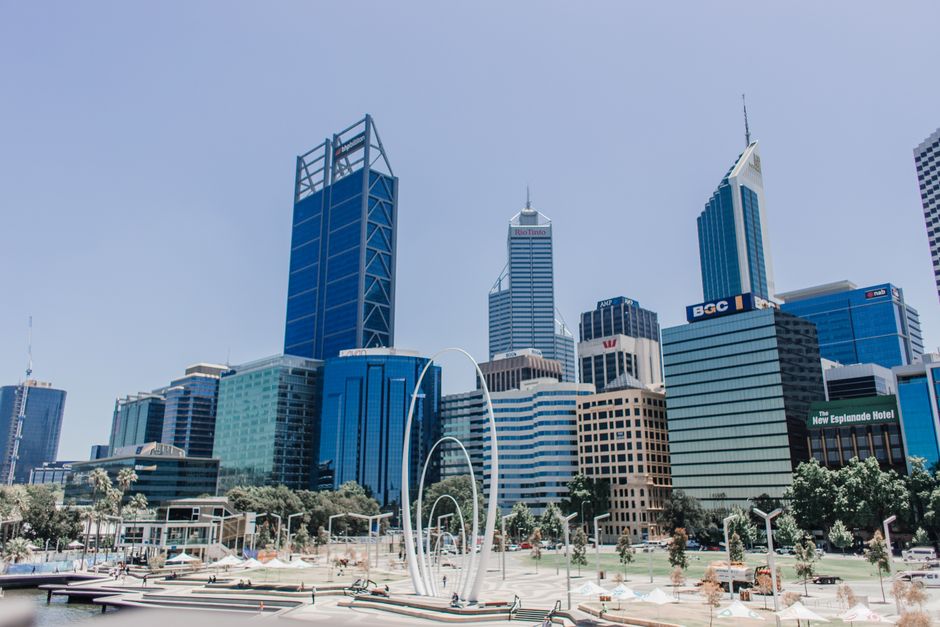
Perth businesses are sitting on a time bomb of duplicated visual content, and the bill for ignoring it is growing. Across industries from Fremantle's hospitality strip to the resource sector offices clustered along St Georges Terrace, marketing teams are discovering that redundant, mismatched and duplicated images across their digital platforms are quietly eroding both search rankings and customer trust. The problem has a dollar figure attached to it — and it is larger than most operators expect.
The issue has sharpened in 2026 because Google's updated crawl-efficiency guidelines, rolled out progressively since March this year, now penalise sites where duplicate visual assets inflate page weight without adding indexable value. For WA's small and medium businesses, which make up roughly 97 per cent of all employing enterprises in the state according to the Australian Bureau of Statistics' business counts data, that algorithmic shift lands hardest. These operators rarely have dedicated digital asset managers. They accumulate images organically — a product shot uploaded twice, a staff headshot replaced but never deleted, a promotional banner repurposed across six landing pages without canonical tagging.
Digital agencies operating out of Leederville and the Subiaco tech precinct have reported a measurable uptick in image-audit requests since the start of the financial year on 1 July. The pattern is consistent. A mid-sized retail or hospitality client with a site that has been running for three or more years typically carries between 800 and 2,400 image files in their content management system. Audits routinely find that between 30 and 45 per cent of those files are either exact duplicates or near-identical resizes of the same source image, consuming server storage and slowing load times without any corresponding benefit to the user.
Page load speed matters commercially. Google's Core Web Vitals benchmarks — publicly documented in the company's Search Central documentation — treat a Largest Contentful Paint score above 2.5 seconds as a signal of poor user experience. Every unnecessary duplicate image file adds to that load. For a Perth e-commerce operator running a WooCommerce store, the practical consequence can be a measurable drop in conversion rates. Industry benchmarks cited by web performance researchers suggest a one-second delay in mobile load time can reduce conversions by up to 20 per cent, though individual results vary substantially by sector and audience.
The storage cost compounds the problem. A business hosting its site through an Australian data centre — several of which operate out of the Canning Vale and Malaga industrial corridors — pays for storage tiers that scale with usage. Cleaning a 2,400-image library down to 1,400 well-tagged, properly compressed originals can reduce storage overhead by 30 to 40 per cent. At current hosting rates for mid-tier managed WordPress plans, which typically sit between $80 and $250 per month depending on the provider, that is not a transformative saving on its own. But combined with the SEO and speed dividend, the case for an annual image audit becomes straightforward arithmetic.
The barrier is not technical complexity. Tools such as Imagify, ShortPixel and the open-source duplicate-finder functions built into platforms like Drupal can automate the detection phase in under an hour for most small sites. The barrier is workflow. Businesses running lean marketing operations — common in Perth's construction supply chain and among the retail tenants at Karrinyup Shopping Centre and Whitford City — tend to upload images at the point of need and never return to audit. Responsibility for the digital asset library falls between the cracks separating the marketing coordinator, the external web developer and whoever manages the social media accounts.
The Metronet project's own public-facing communications infrastructure, managed through the Department of Transport's digital channels, offers an instructive counterexample. Large government programs with structured content governance policies typically enforce image naming conventions and deduplication protocols at the upload stage, preventing the accumulation problem from the start. Private operators can replicate that discipline without a government-sized team — it requires a written policy, a quarterly calendar reminder, and the willingness to spend two hours cleaning what has already accumulated.
For Perth businesses heading into the second half of 2026, the window to act before the Christmas retail surge is roughly three months. An image library audit completed by late September leaves adequate time to rebuild site performance scores before the high-traffic period. The data suggests most haven't started yet.
Spread the word
About this article
Published by The Daily Perth
Stay in the loop
Daily brief
Free, in your inbox before 7am. Weekdays.
The Daily Network — local news across Australia
More local news across Australia