Decades in the Making: How Perth's Metronet Finally Became Real
From a shelved 1990s blueprint to billions in state spending, the story of how suburban Perth ended up rewiring itself around rail.
4 min read
From a shelved 1990s blueprint to billions in state spending, the story of how suburban Perth ended up rewiring itself around rail.
4 min read
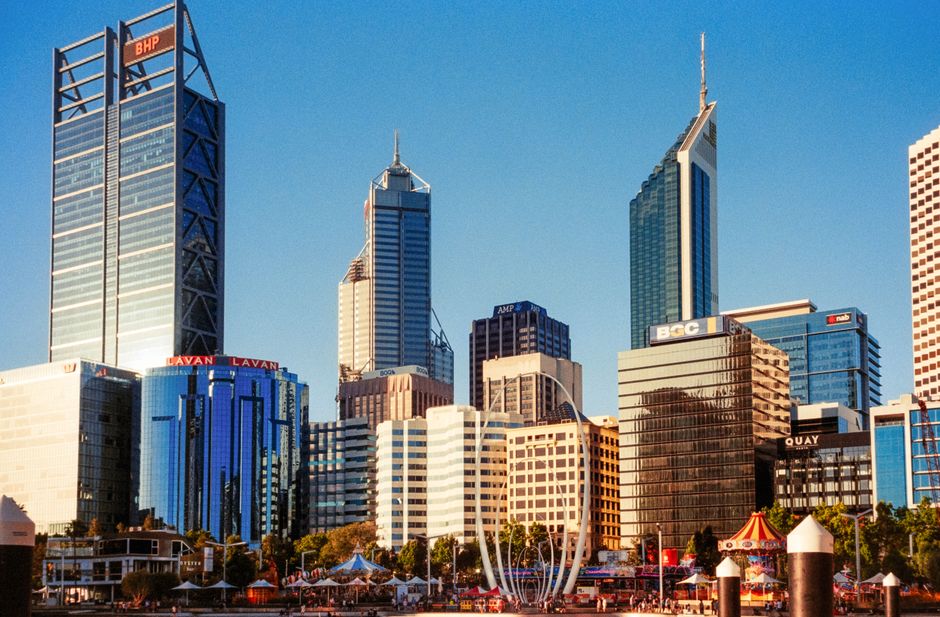
The opening of Metronet's Morley-Ellenbrook Line later this year will mark the largest single expansion of Perth's rail network since the Mandurah Line opened in December 2007. Stations at Malaga, Noranda, Morley, Kiara and Ellenbrook are either complete or in final fitout, and the WA Labor government has staked a significant portion of its infrastructure legacy on making sure trains roll before the end of 2026.
The timing matters because Perth is a different city from the one that kept shelving rail expansion for thirty years. The population crossed 2.2 million in 2025, housing demand has been turbocharged by immigration linked to resource sector labour shortages and AUKUS defence contracts at HMAS Stirling in Rockingham, and median house prices in the outer northern corridor around Ellenbrook and The Vines have climbed past $620,000. Building suburbs without rail and then complaining about congestion on Reid Highway has become something of a civic tradition. Metronet is meant to break it.
Perth had detailed plans for a northeastern rail corridor as far back as 1995, when the Metropolitan Region Scheme flagged the Ellenbrook corridor as a reserved transport route. The reservation sat on maps through the Gallop, Carpenter and Barnett governments, protecting land but spending nothing. Developers built around it, knowing vaguely that rail was coming, but the Ellenbrook estate opened in the late 1990s and grew to more than 25,000 residents with zero rail connection and a single overcrowded bus route down The Avenue to Ellenbrook Central.
The corridor survived because the state government quietly maintained the land reservation under the Metropolitan Region Scheme, which prevented anyone building a shopping centre or a housing estate across the future trackbed. That bureaucratic patience — boring, unglamorous, and largely invisible to residents — turned out to be the entire reason the project was physically possible when funding finally arrived. Without it, the alignment would have been severed a dozen times by subdivisions and commercial lots.
The McGowan government formally committed to Metronet as a centrepiece of its 2017 election platform, bundling multiple rail extensions — Yanchep, Byford, Thornlie-Cockburn and the Morley-Ellenbrook line — under a single brand. The Cook government has continued funding the program through successive budgets, with the 2025-26 state budget allocating $987 million to Metronet projects across the forward estimates, drawn partly from a state surplus underpinned by iron ore royalties running above $9 billion annually.
You don't have to wait for the trains to see the effect. Real estate data from the Real Estate Institute of Western Australia shows median house prices in Morley rose 18 percent in the 24 months to March 2026, outpacing the broader Perth metro average of 11 percent over the same period. Streets within 800 metres of the planned Morley Station site on Collier Road have attracted developers converting older 1970s brick-and-tile homes to grouped dwellings at a pace locals describe as relentless.
Noranda and Beechboro, both sitting within walking distance of planned station precincts, have seen similar pressure. The City of Bayswater, which covers Morley and Noranda, amended its local planning scheme in 2024 to allow higher residential density within 400 metres of station sites, a change that has since seen more than 60 development applications lodged along Camboon Road and Walter Road East.
For first home buyers, the calculus is complicated. Prices near the new stations are rising fast enough that the affordability argument — buy near future rail before it opens — is narrowing quickly. The practical window for that strategy, if it ever existed cleanly, is effectively closing as opening day approaches.
What comes next is the harder governance question. The Public Transport Authority will begin driver training runs on the Morley-Ellenbrook Line in the coming months, with commercial services scheduled to integrate into the existing Transperth network. Feeder bus routes are being redesigned by the Department of Transport to connect Ellenbrook Central, Bullsbrook Road and parts of Swan Valley to the new stations. Whether the surrounding local governments — the City of Swan and City of Bayswater — can coordinate planning and service upgrades fast enough to match the rail timetable is the detail that will determine whether Metronet delivers on thirty years of promises, or simply shifts the congestion problem one suburb further out.
Spread the word
About this article
Published by The Daily Perth
Stay in the loop
Daily brief
Free, in your inbox before 7am. Weekdays.
The Daily Network — local news across Australia
More local news across Australia