Adaptive Reuse Office Perth: Heritage Conversions
How Perth developers are converting heritage buildings into flexible workspaces, tackling CBD office vacancy and reshaping demand across Hay Street.
2 min read
How Perth developers are converting heritage buildings into flexible workspaces, tackling CBD office vacancy and reshaping demand across Hay Street.
2 min read
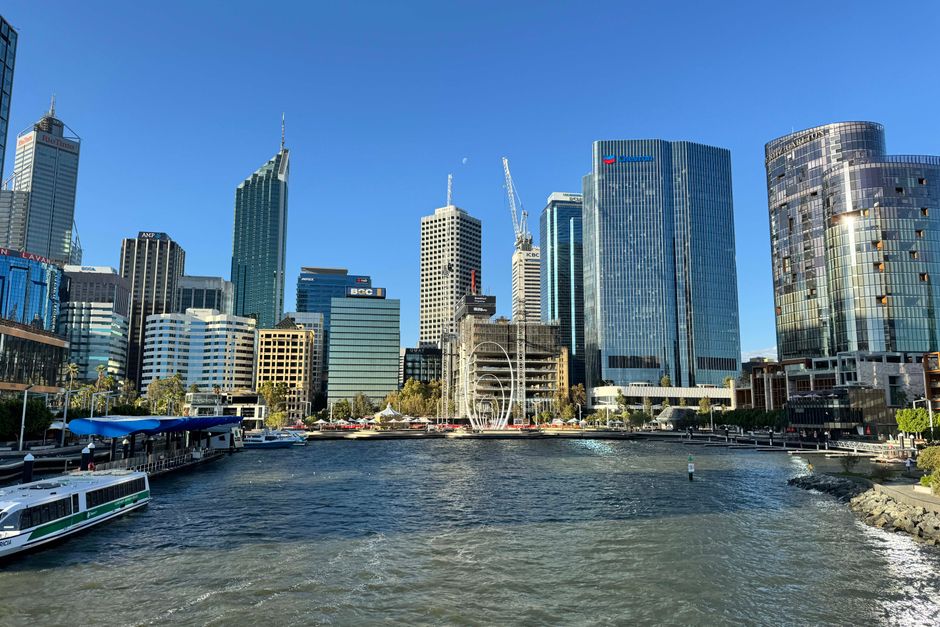
Perth's commercial property market has undergone a seismic shift in recent years, with traditional office vacancy rates climbing to levels unseen in a decade. Yet in the heart of the CBD, one developer is bucking the trend by reimagining what modern workspace looks like.
The shift reflects broader challenges facing property owners across Hay Street, St Georges Terrace, and the wider business district. Average office rents have compressed by roughly 15–20 per cent since 2023, while flexible working arrangements have reduced demand for sprawling, conventional floors. For many stakeholders, the question is no longer whether the market will recover—but how.
Enter adaptive reuse. Rather than fighting headwinds, forward-thinking operators are converting heritage and mid-tier office stock into mixed-use environments designed for modern tenancy models. This approach addresses a critical gap: while traditional office vacancy lingers, demand for flexible co-working, collaborative studios, and hybrid-friendly spaces remains robust. Industry data suggests the flexible workspace sector in Perth has grown by approximately 12 per cent annually over the past three years.
Several local developments now exemplify this strategy. Across the precinct bounded by William Street, Barrack Street, and the riverfront, conversions have introduced ground-floor hospitality, shared meeting facilities, and modular office modules alongside retained commercial tenancy. The model has attracted mid-market professional services, creative firms, and tech startups—demographics traditionally drawn to Melbourne and Sydney but increasingly willing to establish Perth bases when workspace meets lifestyle expectations.
Pricing remains competitive. Flexible office solutions in reimagined CBD buildings now command premiums of 10–15 per cent above conventional lettings, reflecting perceived value around community, amenity, and operational agility. Concurrently, landlords report higher occupancy rates and reduced churn compared to traditional stock, a metric that translates to improved yield stability.
The broader context matters. Perth's population growth, underpinned by interstate migration and skilled migration to resource and professional sectors, is beginning to translate into sustained commercial demand. Meanwhile, state government initiatives around CBD activation and heritage conservation have provided both regulatory encouragement and, in some cases, financial incentives for adaptive conversion projects.
As global commercial real estate grapples with structural oversupply and changing work patterns, Perth's embrace of flexible, adaptive models positions the city competitively. For developers willing to invest capital and imagination, the message is clear: the future of Perth's office market belongs not to preserving the past, but to reimagining it.
This article was compiled by AI and screened before publishing. See our editorial standards.
Spread the word
About this article
Published by The Daily Perth
Stay in the loop
Daily brief
Free, in your inbox before 7am. Weekdays.
The Daily Network — local news across Australia
More local news across Australia