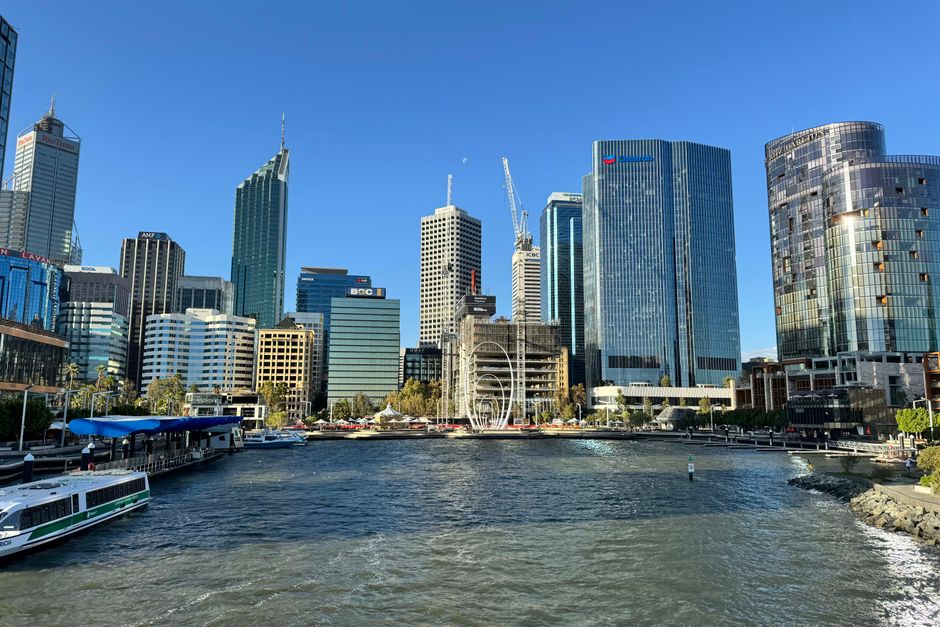
Rising cost-of-living pressures and volatile investment flows are forcing local employers to compete harder for skilled workers, reshaping hiring patterns across the city's CBD and emerging precincts.
Perth's employment landscape is undergoing a sharp realignment as global economic volatility and domestic cost-of-living pressures collide with talent shortages, forcing businesses across the city to rethink recruitment strategies and compensation models.
The trend is particularly evident in the CBD and along the emerging business corridors of East Perth and South Perth, where finance, tech, and professional services firms are competing aggressively for mid-to-senior level talent. Property prices in sought-after areas like Subiaco and Cottesloe have climbed steeply, while rental yields in inner-city precincts such as Northbridge and Leederville have compressed, making it increasingly difficult for businesses to retain staff without significant salary adjustments.
"We're seeing a fundamental shift in how Perth businesses value talent," says a senior recruiter at one of the city's largest HR consultancies. The pressure is particularly acute in sectors dependent on international capital flows. Mining services companies, which have historically anchored Perth's employment base, are now competing with financial technology firms and renewable energy startups for the same pool of graduates from universities including UWA and Curtin.
Advertisement
The Western Australian Chamber of Commerce and Industry has flagged concerns about retention rates among junior professionals, with many citing unaffordable housing costs and limited career progression within Perth's market as drivers for interstate migration. Average rents in the CBD have risen approximately 18 per cent over the past two years, while entry-level salaries in professional services have not kept pace.
Investment uncertainty—driven by the recent US-led hesitation on trade deals and broader geopolitical tensions—has created a secondary effect. Forward-looking companies are accelerating digital transformation projects and relocating operations to lower-cost areas within Western Australia, dispersing employment opportunities beyond the traditional CBD hub. Midtown precincts like Welshpool and Kwinana are seeing increased demand for office and light industrial space as employers seek operational efficiencies.
Meanwhile, some of Perth's most prominent organisations—including major banking and insurance operations headquartered in the city—are implementing flexible work policies and offering remote-work options to broaden their talent pool beyond metropolitan boundaries. This shift is gradually reshaping commercial property demand across Perth's business precincts.
For job seekers, the market presents both opportunity and challenge. Demand for skilled workers remains robust, but competition for senior roles has intensified, and salary growth is increasingly conditional on sector exposure to international investment or commodity markets. Local recruitment experts suggest the market will likely remain volatile throughout 2026, with talent mobility and cost management remaining central concerns for Perth employers navigating an uncertain economic environment.
This article was compiled by AI and screened before publishing. See our editorial standards.