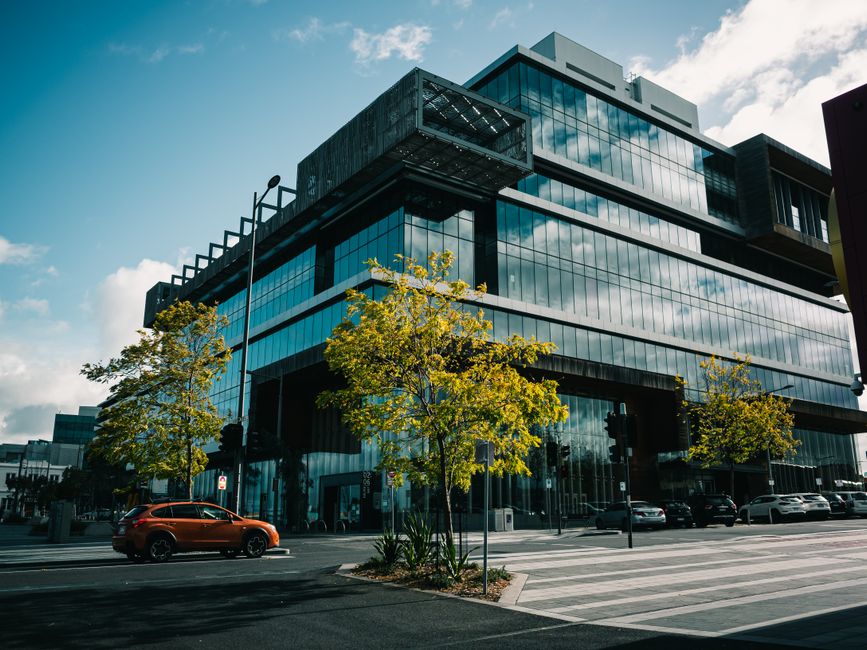
Perth's commercial property market is undergoing a profound geographic shift, and the implications for the local job market are proving far more complex than simple cost-saving calculations.
Over the past 18 months, vacancy rates in Perth's central business district have climbed to levels not seen since the post-mining boom slowdown. Meanwhile, secondary precincts like Subiaco, Joondalup, and Cannington have experienced a surge in leasing activity as businesses flee the escalating rents along St Georges Terrace and the surrounding precinct. Commercial office space in the CBD now commands upwards of $350 per square metre annually, while equivalent Grade A space in Subiaco has settled around $240 per square metre—a gap significant enough to influence strategic relocation decisions.
For Perth's talent-dependent sectors—technology, professional services, and creative industries—this spatial dispersal presents an uncomfortable reality. The CBD's historic clustering created a natural gravitational pull for ambitious professionals, particularly younger workers seeking career mobility and networking density. Moving operations to the suburban fringe disrupts this ecosystem.
"We're seeing companies make lease decisions based purely on spreadsheets, without fully accounting for recruitment and retention costs," explains a spokesman for the Chamber of Commerce and Industry WA. Regional data suggests that Perth-based tech firms relocating to Joondalup or Cannington experience 15-20% higher staff turnover within the first two years compared to CBD-anchored counterparts.
The trend is creating unexpected winners. Transport operators, childcare facilities, and suburban hospitality venues near major office relocations are experiencing genuine demand surges. Subiaco's retail strips, particularly around Rokeby Road, have benefited considerably from increased daytime foot traffic.
However, the fragmentation carries risks. Unlike Melbourne's polycentric CBD strengths or Sydney's integrated transport corridors, Perth's suburban office nodes lack the interconnected infrastructure and social density that typically support vibrant employment districts. Workers commuting from northern suburbs to southern office parks face genuinely arduous journeys, with public transport options remaining limited.
Smart employers are adapting strategically. Some are embracing hybrid arrangements to mitigate commute friction, while others are establishing smaller CBD satellite offices specifically for client-facing roles, keeping headquarters costs down while maintaining talent pipeline access.
The commercial property shift isn't inherently negative—it could eventually encourage more distributed, locally resilient employment nodes across metropolitan Perth. But without deliberate planning and infrastructure investment, this market-driven decentralisation risks creating talent deserts in booming suburbs while undermining the CBD's remaining competitive advantages.
The outcome will largely depend on whether Perth's business leadership views this transition as a cost-cutting exercise or an opportunity to fundamentally reimagine how and where professionals work across the city.
This article was compiled by AI from the sources linked above and screened before publishing. See our editorial standards.