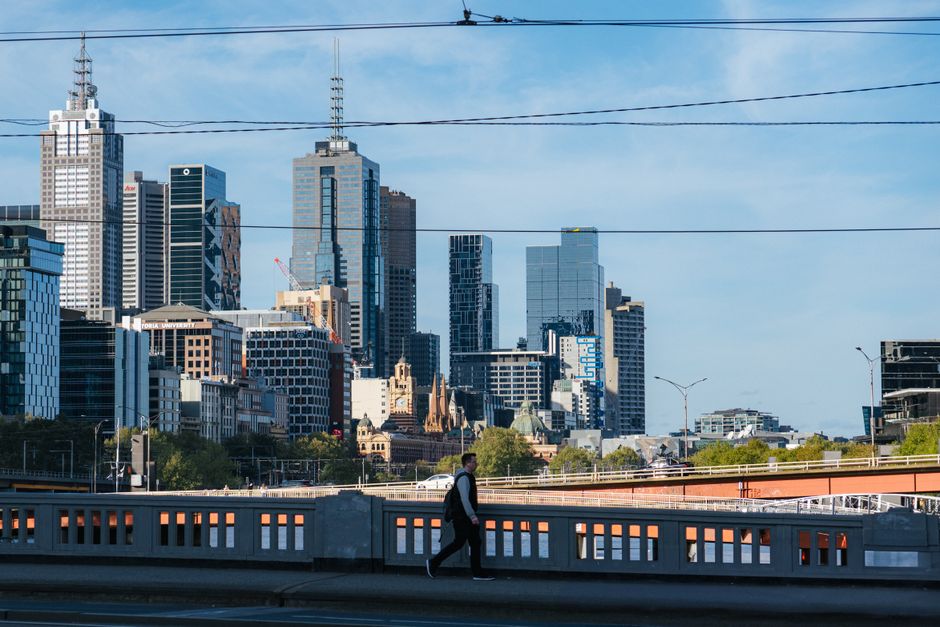
Shifting international supply chains and geopolitical uncertainty are forcing local employers to rethink hiring strategies and skill requirements across the city's business precincts.
Perth's business district is experiencing a quiet but significant restructuring as global trade dynamics shift rapidly. The volatility rippling through international markets—from Middle Eastern tensions affecting shipping routes to evolving trade partnerships—is forcing local companies to fundamentally rethink how they recruit and develop talent.
Along St Georges Terrace and in the gleaming office towers of the CBD, major firms are actively seeking employees with expertise in supply chain management, international compliance, and geopolitical risk analysis. These roles, once considered niche, are now commanding premium salaries. Recruitment agencies operating from premises across the city report a 34 per cent increase in demand for logistics specialists over the past 18 months, with starting salaries for experienced candidates now ranging from $95,000 to $130,000—significantly above historical averages.
"We're seeing Perth companies build internal capabilities they previously outsourced," says the local business community perspective. Export-oriented firms in the resources sector, which remains central to Perth's economy, are expanding their in-house expertise in navigating tariff structures, sanctions compliance, and alternative market pathways. The unpredictability of traditional shipping lanes has accelerated investment in local analytical talent.
Advertisement
The University of Western Australia's business school reports growing enrollment in international trade and supply chain courses, with graduates increasingly snapped up before graduation. At the same time, established professionals from other sectors—accounting, finance, even hospitality management—are pivoting toward these emerging roles, attracted by both security and advancement prospects.
Perth's geographic isolation, once a challenge, is becoming an advantage. Companies view the city as a natural hub for Asian-Pacific operations, and they're investing in talent here accordingly. Riverside office precincts near the Swan River have become hotspots for companies establishing regional headquarters with expanded trade and compliance functions.
However, the shift presents challenges. Smaller enterprises throughout Subiaco and Northbridge struggle to compete for specialist talent against multinational corporations establishing local centers. Wage pressures are rising across the broader market as companies compete for experience.
The trend also highlights Perth's broader economic diversification. While resources remain fundamental, the city is building a more sophisticated professional services infrastructure around global commerce—one that may prove more resilient than previous boom-bust cycles.
As international conditions remain uncertain, Perth's employers are betting that local talent and proximity to Asian markets position the city advantageously. Whether this reshaping proves lasting depends largely on how quickly geopolitical conditions stabilise—and whether Perth's workforce can develop expertise quickly enough to meet demand.
This article was compiled by AI from the sources linked above and screened before publishing. See our editorial standards.